
Program Purpose
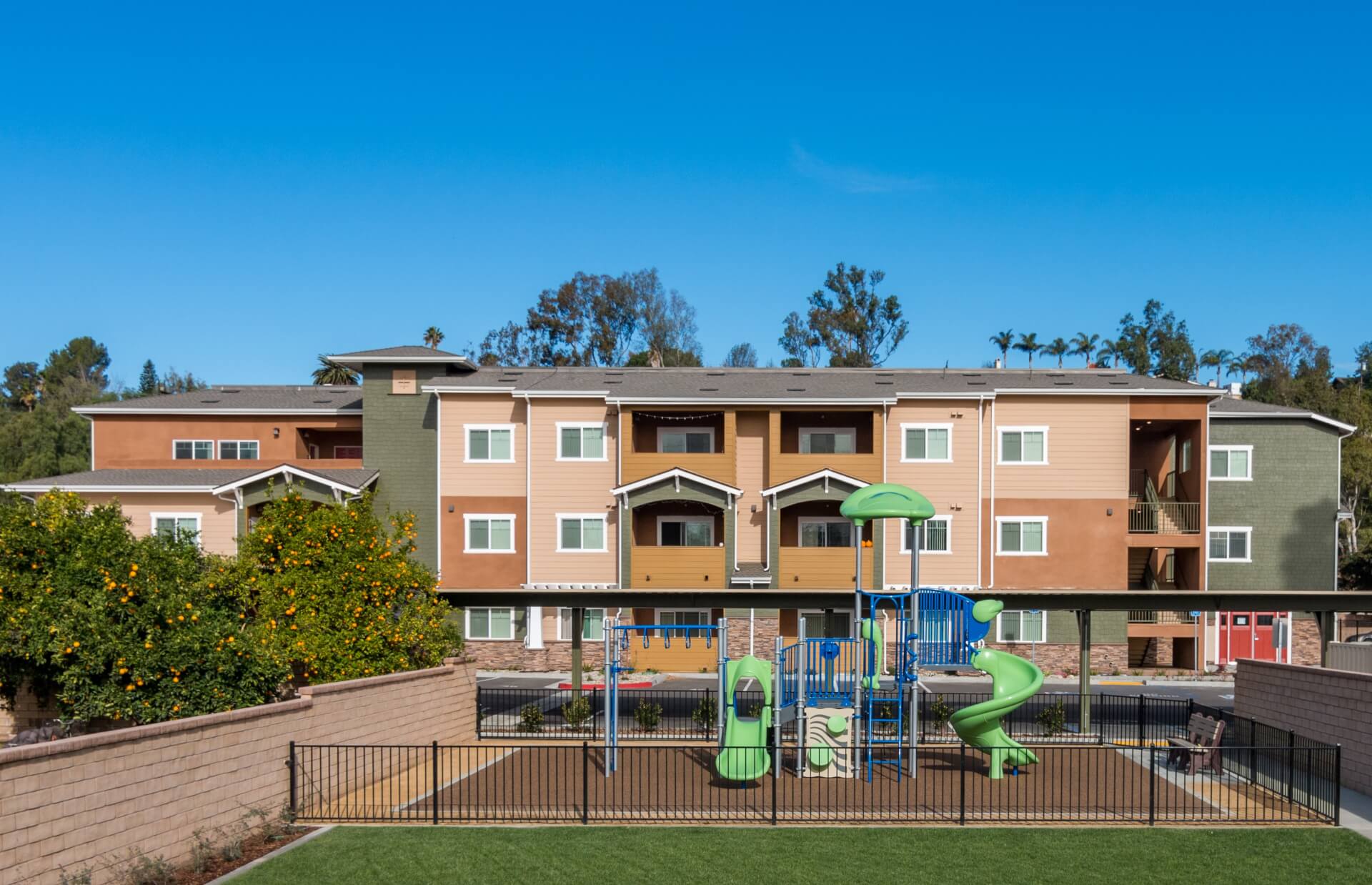
Established in collaboration with Southern California Association of Governments (SCAG), the Housing Trust Fund VC Residual Receipts Loan Fund is designed to provide residual receipts loans to support new housing developments which expand Ventura County’s affordable housing stock. Loan funds are used to support the production of affordable housing developments by experienced public, nonprofit, or private developers. Loans are structured as 15-18 year residual receipts loans.
What is a Residual Receipts Loan Fund?
A residual receipts loan fund is a type of financing commonly used in affordable housing development, where loan repayment is based on the project’s available cash flow rather than a fixed amortization schedule. Under this structure, the borrower is only required to make payments from the “residual receipts,” which are the net cash proceeds remaining after all approved operating expenses, debt service on senior loans, and required reserves have been paid. Any residual receipts are then split according to a predetermined formula, often with a portion going to the developer and the remainder distributed among subordinate lenders, such as public or nonprofit entities like Housing Trust Fund VC.
This approach helps preserve the financial viability of affordable housing projects by reducing the upfront repayment burden and aligning repayment with actual project performance.
Eligibility Requirements
- The development must be new construction of affordable rental housing located within Ventura County.
- Housing Affordability is defined as households that meet federal income level definitions with incomes, adjusted for household size, between:
- 0-30% of the County Area Median Income (AMI) – extremely low-income
- 31-50% – very low-income households
- 50-80% – low-income households
- Housing Affordability is defined as households that meet federal income level definitions with incomes, adjusted for household size, between:
- All projects must fully meet Regional Early Action Plan (REAP) 2.0 infill criteria. The REAP 2.0 infill definition can be found here.
- In the California Tax Credit Allocation Committee (TCAC) application process, tax credit bonus points are awarded to projects that meet specific policy priorities established by the state to promote deeper affordability, geographic equity, or other public benefits. These bonus points can significantly improve a project’s competitiveness for Low-Income Housing Tax Credits (LIHTCs), especially in oversubscribed funding rounds. For example, applicants may receive bonus points for incorporating deeper income targeting (such as units affordable to households at 30% of Area Median Income), securing local financial support, or aligning with state climate and equity goals. Soft financing—such as residual receipts loans or deferred-payment loans from local government or nonprofit sources—can play a critical role in securing these points, as TCAC awards bonus points for projects that demonstrate meaningful contributions of local or public funds. The points are added to a project’s overall application score, which determines how it ranks relative to other applicants within the same funding category or region. Because TCAC awards credits based on score rankings, even a few bonus points can be the deciding factor in whether or not a project is awarded credits.
- The project must be in development by June 30, 2031.
- Eligible borrowers include qualified nonprofits, private sector developers, public agencies, social service agencies, faith-based and other community groups, and partnerships between a private sector developer and a qualified 501(c)(3), where the exempt purposes of the development are protected through legal agreements.
How to apply?
Applications are currently being accepted until 5:00 PM on July 2, 2026.
Click the buttons below to download the Notice of Funds Available (NOFA) from Housing Trust Fund VC’s Program Guidelines, and to request an application. The Program Guidelines and NOFA contain a self-screening scoring chart to identify the highest scoring projects that will be invited to apply for a loan.
Questions? Submit your questions below by the deadline. All questions and answers will be posted on this page in the FAQ section for public viewing.
Milestones and Deadlines
|
MILESTONES |
DEADLINES |
|---|---|
|
Applications Open |
June 2, 2026 |
|
Submit Questions (see below) |
June 26, 2026 |
|
Answers to Questions Posted (here) |
updated daily |
|
Applications Due |
July 2, 2026 by 5:00 pm |
|
Winner Announced |
July 16, 2026 |
Questions
Must be submitted by 11:59PM on June 26, 2026.
Please complete the form below and click submit. All questions and answers will be posted publicly on this page in the FAQ section by the deadline noted above.
FAQ’s
All questions submitted through the form above will be posted here with answers
Applications are due by 5:00 PM on July 2, 2026. Applications received after this date will not be considered.
The HTFVC Residual Receipts Loan is structured as a soft loan, with repayment from available residual receipts during the loan term, consistent with the project’s regulatory agreements and partnership structure. This repayment is typically made from a proportional share of the residual receipts available under the project’s cash flow waterfall, which are generally funded from 50% of annual net cash flow after payment of operating expenses, debt service, required reserves, and other senior obligations.
At the end of the 18-year term:
HTFVC’s expectation is that the loan will be repaid at or prior to maturity, typically in connection with a refinancing, sale, resyndication, or other capital event.
While HTFVC’s goal is to be repaid at maturity, we recognize that project conditions at Year 18 may vary. In circumstances where repayment is not feasible, HTFVC may consider requests for an extension or restructuring, subject to underwriting, program guidelines in effect at that time, and HTFVC approval. Such requests would be evaluated on a case-by-case basis and are not guaranteed but it is hard for me to foresee a scenario in which HTFVC would force a maturity default, but our intention is to recycle the funds.
Regarding residual receipts and the waterfall:
During the loan term, HTFVC participates in residual receipts pro rata with other soft lenders, after payment of operating expenses, required reserves, hard debt service. HTFVC’s position is therefore subordinate to hard debt and any senior loans with repayment priority under the project’s financing documents, and generally pari passu with other public soft financing sources, unless otherwise specified.
At maturity, any repayment would typically occur as part of a refinancing or other transaction, with HTFVC expecting to be repaid in accordance with its position among the soft lenders.

This Project is funded and managed by the Southern California Association of Governments (SCAG) with Regional Early Action Program 2021 grant funding from the State of California Department of Housing and Community Development.